 Italiano
 English
Nanakorobi Yaoki – Fall seven times, rise the eighth
You are here
Nanakorobi Yaoki – Fall seven times, rise the eighth
May – September 2026
Fondazione Giorgio de Marchis Bonanni d'Ocre
Corso Vittorio Emanuele II, 23 – L'Aquila
Nanakorobi Yaoki – Fall seven times, rise the eighth is the project that the Fondazione Giorgio de Marchis Bonanni d'Ocre proposes for L'Aquila Capital of Culture 2026, with the aim of enhancing the relationships that the L'Aquila territory builds with a distant yet kindred country, Japan. Two lands that find themselves living with a frightening natural phenomenon, earthquakes, and that bear witness every day to the fact that it is precisely from pain and destruction that one can and must begin to live and rebuild again. Repairing the cracks with the most precious elements we possess – art and culture – thus means making them visible with the golden beauty of the mark.
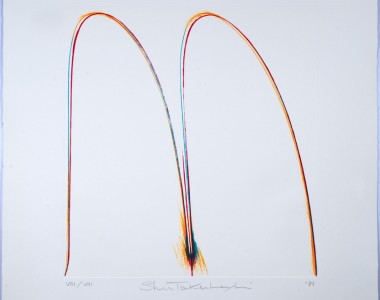
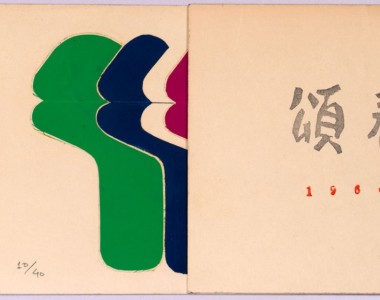
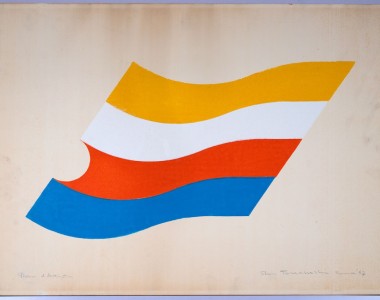
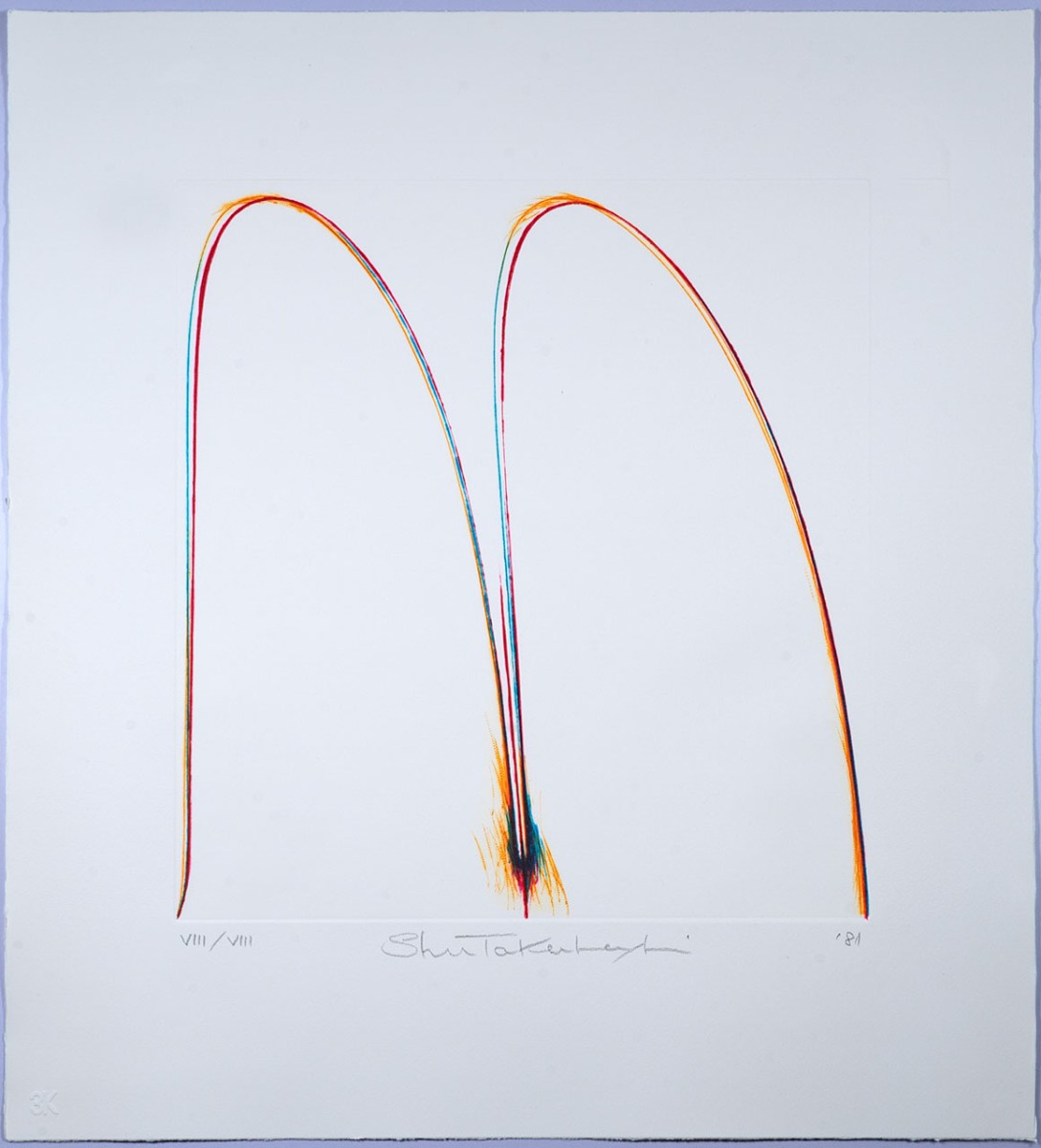
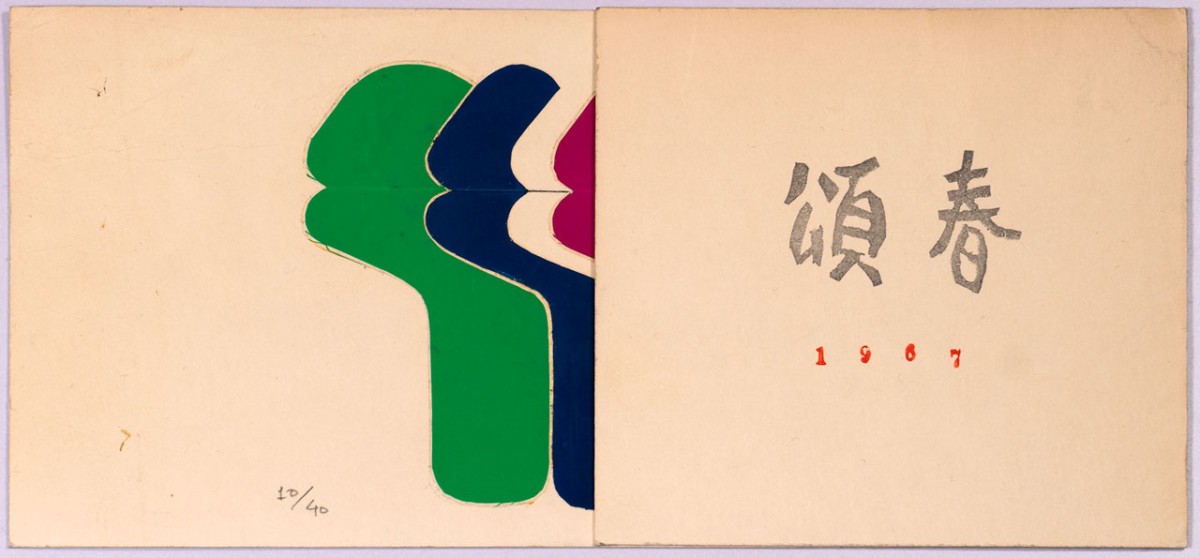
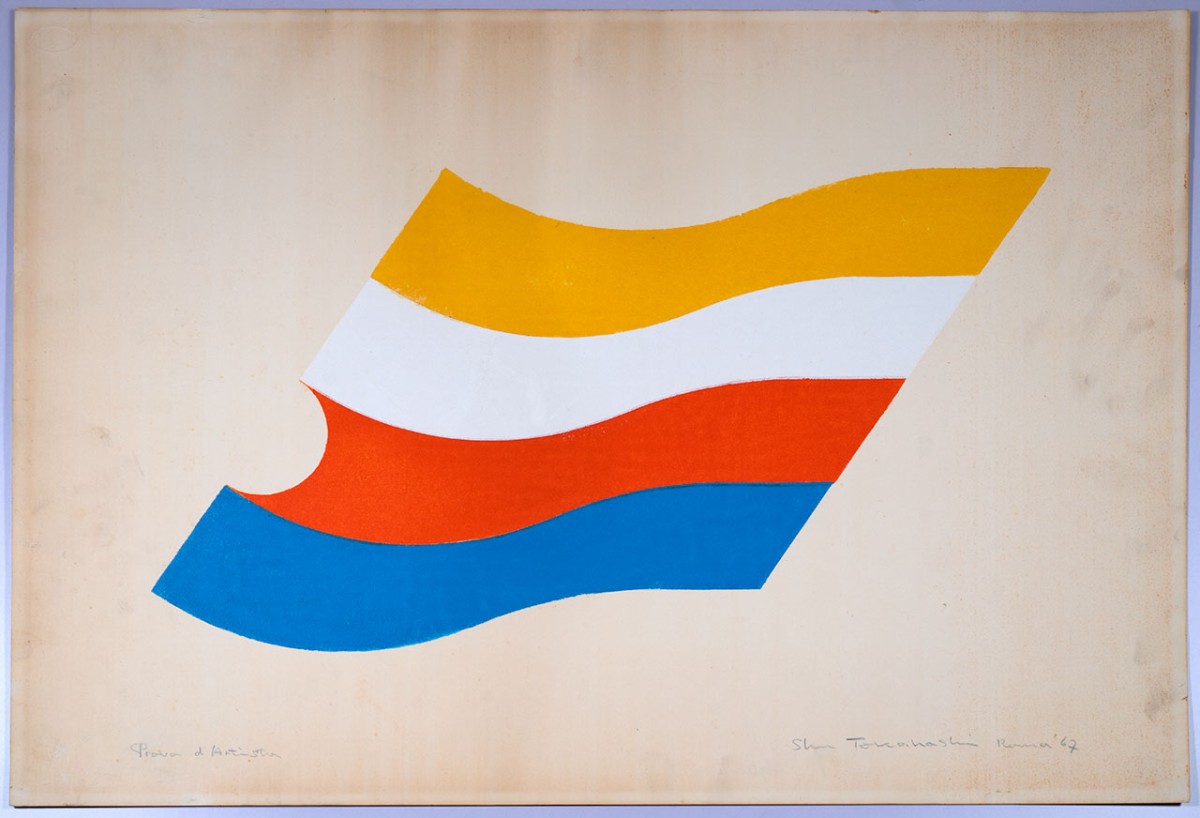
The project is structured around two articulated initiatives, rich with events: Imagining the invisible curated by Fabio Massimo Fioravanti from 16 May to 20 June – an in-depth exploration of NŌ theatre – and Shu Takahashi. A Japanese artist in Giorgio de Marchis's collection. A floating world between East and West, curated by Anna Imponente from 2 July to 4 September 2026. The latter is an exhibition project conceived to enhance the relationship between two men who represent two cultures with their respective languages: de Marchis and Takahashi shared, in fact, beyond a deep friendship, a great passion for art and a sincere love for the two countries that united their lives.
Imagining the invisible (16 May – 20 June)
On Saturday 16 May, Imagining the invisible by Fabio Massimo Fioravanti will be inaugurated, with the participation of Prof. Giorgio Amitrano, professor of Japanese Language and Literature at the University of Naples L'Orientale.
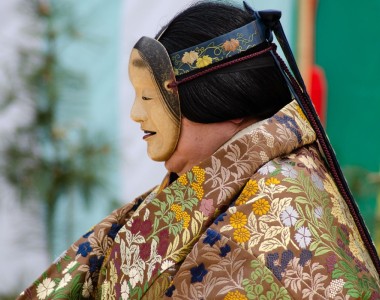
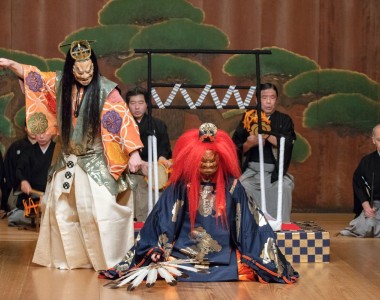
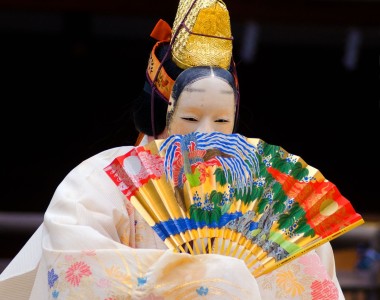
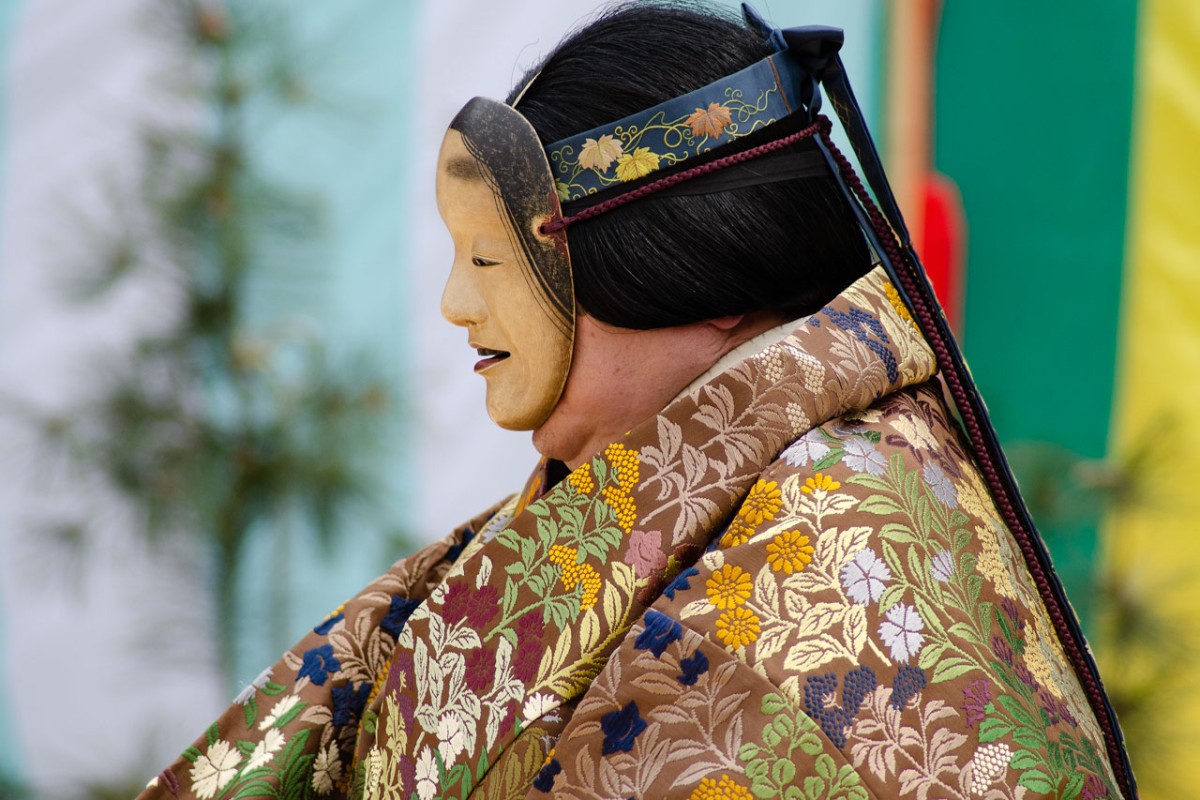
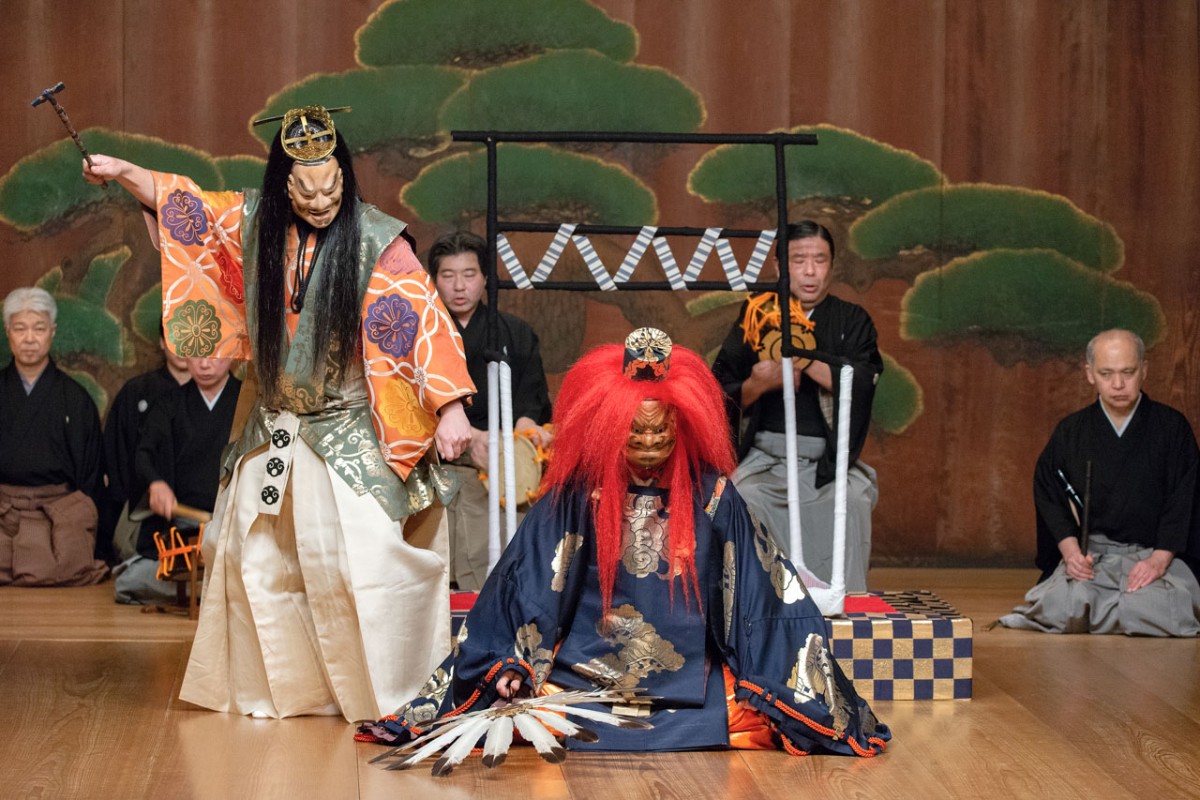
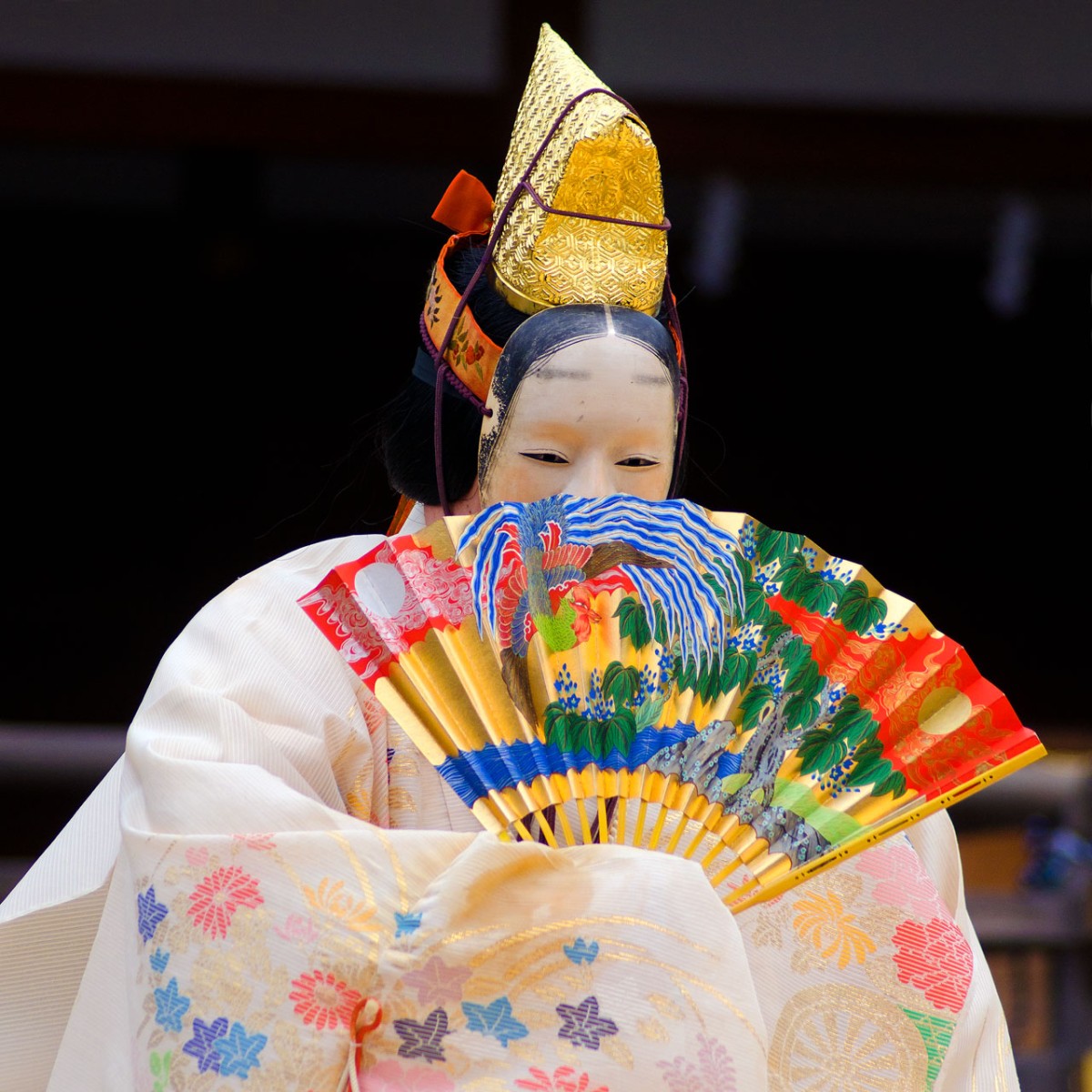
The exhibition project is composed of a selection of photographs on NŌ theatre by Fabio Massimo Fioravanti, accompanied by 40 ukyo-e prints by Tsukioka Kogyo (exhibited for the first time in Italy), produced between the 19th and 20th centuries, by NŌ masks by the artist Keiko Udaka with some stage costumes and fans, and by the shimai (short dance) of the shite and shihan Monique Arnaud.
NŌ theatre, the highest expression of traditional Japanese culture and a UNESCO Cultural Heritage of Humanity since 2008, is a dramatic theatrical form composed of music, song, mimetic movements and dance, transmitted from Master to disciple since its inception; a stage art dating back to the end of the 14th century. NŌ theatre, through its masks, recounts the feelings of man – love, jealousy, anger, ferocity, passion, betrayal, redemption, death – and is characterised by the essentiality of the choreography, by a rich symbolism and by a deep evocative force. The photographs of Fabio Massimo Fioravanti, who has been documenting NŌ theatre in Japan for over 35 years, are divided into 5 sections: performances in theatres, performances in Shinto and Buddhist temples, backstage and the mirror room (the most secret place of NŌ), daily exercises of the actors, and the making of the masks.
On Saturday 23 May, the meeting with the artist Keiko Udaka will take place, in which she will illustrate the art of making a NŌ mask between tradition and innovation, along with the performance of Monique Arnaud in the courtyard of Palazzo Cappa Cappelli.
On Saturday 30 May, the journalist and writer Paolo Di Paolo will be in dialogue with Dacia Maraini about her life experiences in Japan.
On Saturday 6 June, the concert by Fabrizio Valente, who will perform with the shakuhachi, a typical Japanese wind instrument.
On Saturday 13 June, the writer Rossella Marangoni will be in dialogue with Fabio Massimo Fioravanti: "Like a grass floating on the water: Komachi and other female characters in NŌ theatre".
On Saturday 20 June, the finissage of the exhibition with a conference-dialogue on Japanese theatre between Professor Matteo Casari, lecturer in History of Theatres in Asia and Performing Cultures of Asia at the University of Bologna, and Fabio Massimo Fioravanti.
Shu Takahashi. A Japanese artist in Giorgio de Marchis's collection. A floating world between East and West (2 July – 4 September 2026)
The project, curated by Anna Imponente, aims to highlight two figures: Giorgio de Marchis and Shu Takahashi. Giorgio de Marchis was, in fact, director of the Italian Cultural Institute in Tokyo for two terms, covering 15 years in total. De Marchis and Takahashi shared a deep friendship, a great passion for art and a sincere love for the two lands that united their lives. The Foundation presents a selection of works by Takahashi from its Collections, enriched by loans from private collectors and public institutions, as well as a series of cultural insights.
On Thursday 2 July, the inauguration of the exhibition with the participation of Anna Imponente and Ari Takahashi.
INFO
Fondazione Giorgio de Marchis Bonanni d'Ocre
Corso Vittorio Emanuele II, 23 – L'Aquila
www.fondazionedemarchis.it – fondazione.demarchis@gmail.com
Press office
Roberta Melasecca – Melasecca PressOffice / Blowart
roberta.melasecca@gmail.com – info@melaseccapressoffice.it
tel. 3494945612 – Press kit on www.melaseccapressoffice.it